
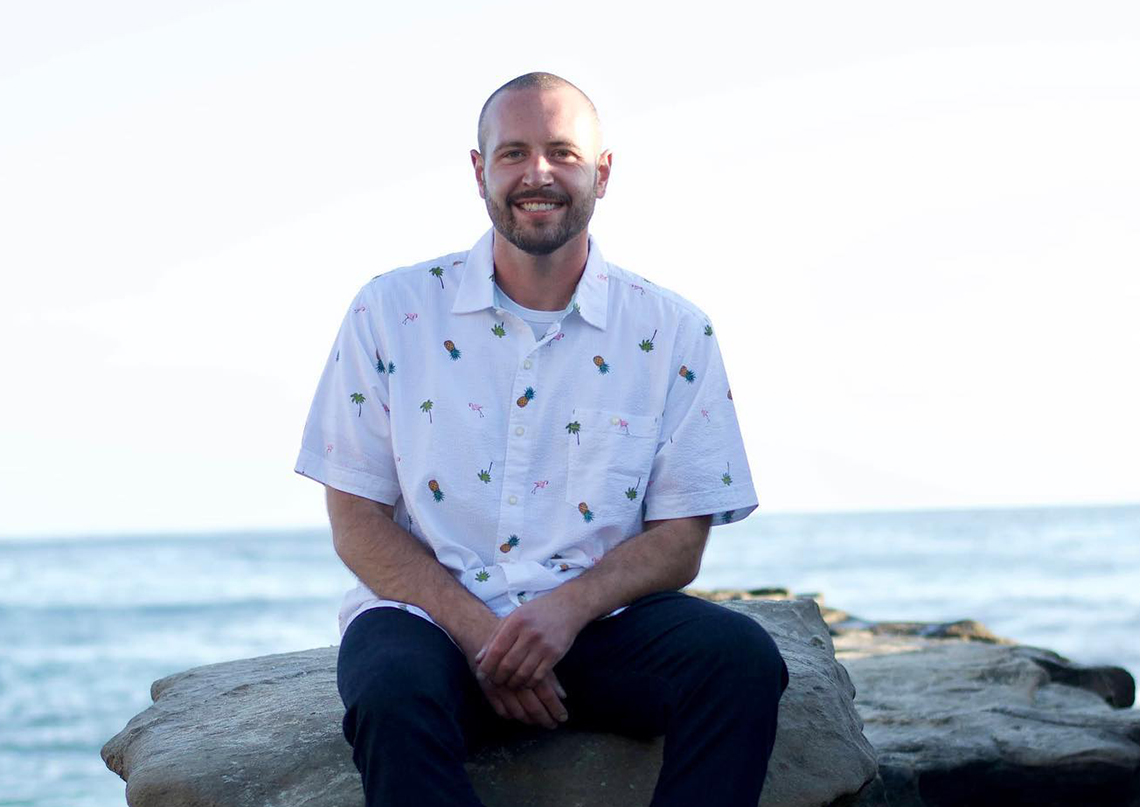
Brian Vogel
From Unfamiliarity to Leadership
A 17-year-old boy who doesn’t want to get out of bed in the morning doesn’t usually trigger a lot of parental alarms.
But in 2008, Brian Vogel wasn’t just a sleepy teenager; he was dealing with extreme fatigue and pain.
“I remember my joints in my hands and my arms and legs hurting immensely,” he says. “And I remember just not being able to physically get out of bed.”
His mother, Lori, was immediately concerned. Brian was an active child and loved playing sports. She got him a referral to a rheumatologist. The doctor suspected Lyme disease, but tests came back negative. Brian then ended up with an incorrect diagnosis of juvenile rheumatoid arthritis. His symptoms did not respond to the indicated treatment.
The next two years were an onslaught of doctor appointments, blood tests, medications, a suggested splenectomy (which ultimately didn’t happen), and pain—before he finally had a name for what he was experiencing.
Systemic lupus erythematosus (SLE).
Living with lupus
SLE is an autoimmune disease that attacks healthy tissue in the body and can come with a host of painful conditions. For Brian, it causes idiopathic thrombocytopenia (or low platelet count), kidney disease, Raynaud’s phenomenon (decreased blood flow to the fingers and other extremities, causing feelings of cold and numbness), joint pain, inflammation, fatigue, alopecia, and skin rashes.
“Once you’re labeled with a chronic illness, it determines a lot of things—especially when you’re young—that you might not be able to do in the future,” Brian explains. “So [the doctor] was very hesitant and very cautious [about making a diagnosis].”
Ultimately, Brian’s doctor did diagnose him with lupus because his body responded to high doses of steroids and his symptoms began to diminish following the treatment.
But the steroids came with side effects.
“There was one point when I was at college and I had the huge moon face. I gained almost 80 pounds. I was really self-conscious; my face was as round as a balloon,” he says. “And the side effects definitely messed with my head a lot. You get angry really easily because you’re on such a high dose of steroids; but overall, the treatment always seemed to work.”
Today, he takes several additional medications, including a weekly self-administered auto-injector of an immunosuppressant drug, and counts diet, exercise, self-care, and emotional and stress management as important tools in managing his lupus.
For Brian, his symptoms manifest early in the morning or later in the evening, usually as extreme fatigue. Some days he wakes up and can’t move certain joints in his hands. In college, his feet would swell up, and he would be in so much pain he had difficulty walking.
SLE is usually associated with women—in fact, it is more common in women than men at a ratio of 10 to 1. It is also more common in Black, Asian, and Hispanic communities. So as a white man with lupus, Brian stands out.
“I’m the unicorn, because it’s very unlikely for me to meet another male, let alone another white male, with the disease,” he says.
That fact drives his interest in advocacy, because he wants other men with lupus who are embarrassed or feel like they’re not being heard to know that they’re not alone.
Taking new steps
Brian, 30, lives in San Diego, where he moved from New York mid-COVID-19 pandemic.
“I really just wanted a change,” he says.
He enjoys hiking and appreciates San Diego’s year-round outdoor options, whether he’s playing beach volleyball, swimming, or golfing.
He is working as an instructional aid and substitute teacher for a charter school while he is studying at the University of San Diego for his master’s degree in education, with a credential in biology and another that focuses on mild to moderate disability for special education teachers. He hopes to teach in secondary schools upon completing the program.
With his lupus, Brian has to be cognizant of not pushing himself too hard.
“I do have to be mindful of what my body is telling me,” he says. “Because if I don’t, my body will react and I’ll end up having to be bedridden for a certain period of time. It is hard being the friend that’s like, ‘I’m gonna have to sit this one out. You guys are gonna have to go on without me. I need the rest.’ But I found that the people that are really truly your friends will respect that and understand.”
Learning to self-advocate
Brian’s love of science has come in handy while navigating medical terminology and his lupus diagnosis.
“I have my bachelor’s in biology, so I’m curious naturally about my disease in my own body,” he says. “It is important to ask your doctor questions.”
He says he learned to model this self-advocacy from his mother.
“Just watching my mom at all my appointments, while being young—she was the mom in the movies that would take their child to the doctor and be like, ‘I don’t like that,’ and ask the questions for me,” Brian shares. “She asked all the questions about what the medication was, what it was doing, and what that blood test is for.”
Brian’s mother not only found him doctors and specialists that helped his treatment, but she also helped him find a support system.
“Being so young and having serious medical problems definitely segregates you,” Brian says. “And on top of that, I was gay and had a really hard time dealing with that. When you couple the two together, I was really depressed and lonely. I went through a period of time like, ‘I’m not going to doctor’s visits,’ and sort of refusing to accept the fact that I had a chronic illness.”
His family was always supportive, but Brian says he was missing a community—someone to say, “Hey, I have the same thing. You’re no different than me. You’re not special or unique; there’s other people around that are going through the same thing.”
Finding a community
Through her research, Lori, Brian’s mother, found the Lupus and Allied Diseases Association (LADA) and contacted the organization’s president and CEO, Kathleen Arntsen.
Brian, Lori, and Kathleen spoke via phone, and Kathleen invited Brian to volunteer at LADA’s annual golf tournament in Verona, New York. Next, he joined LADA at a Lupus Annual Awareness Day event in Albany.
“I went as a constituent with Kathleen and the organization, getting to meet with legislators in the Senate and Assembly on Capitol Hill,” he says. “I learned how to advocate from [Kathleen] probably second most [after my mother]. She’s an amazing human being, and she’s taught me a lot about how the [health care and insurance] system works, because I wasn’t really familiar with step therapy and all the things that she advocates for to help people with chronic illnesses in general.”
Brian says finding Kathleen and LADA was validating and allowed him to connect with people experiencing the same things as him.
“I don’t know how to explain it, but it does really make you just feel more heard and like you’re not crazy,” he says.
He now serves on the board of LADA—a way to have his voice heard and to help others.
“It’s been a really cool opportunity to learn more about how a national nonprofit operates,” he says. “We get to spread our mission educating the public, advocating for patient access—just all the ins and outs.”
—Kirsten Ballard