
Pain Doesn’t Discriminate By Age
When you’re a child, people may think you’re too young for chronic pain.
When you’re a young adult, your symptoms may be dismissed because you “look fine.”
As you get older, people may finally stop questioning whether you’re too young for pain—only to start assuming your pain is simply part of aging.
But pain doesn’t follow an age limit. It can happen to anyone, at any stage of life. And while chronic pain may look different at various ages, many of the same challenges surface again and again.
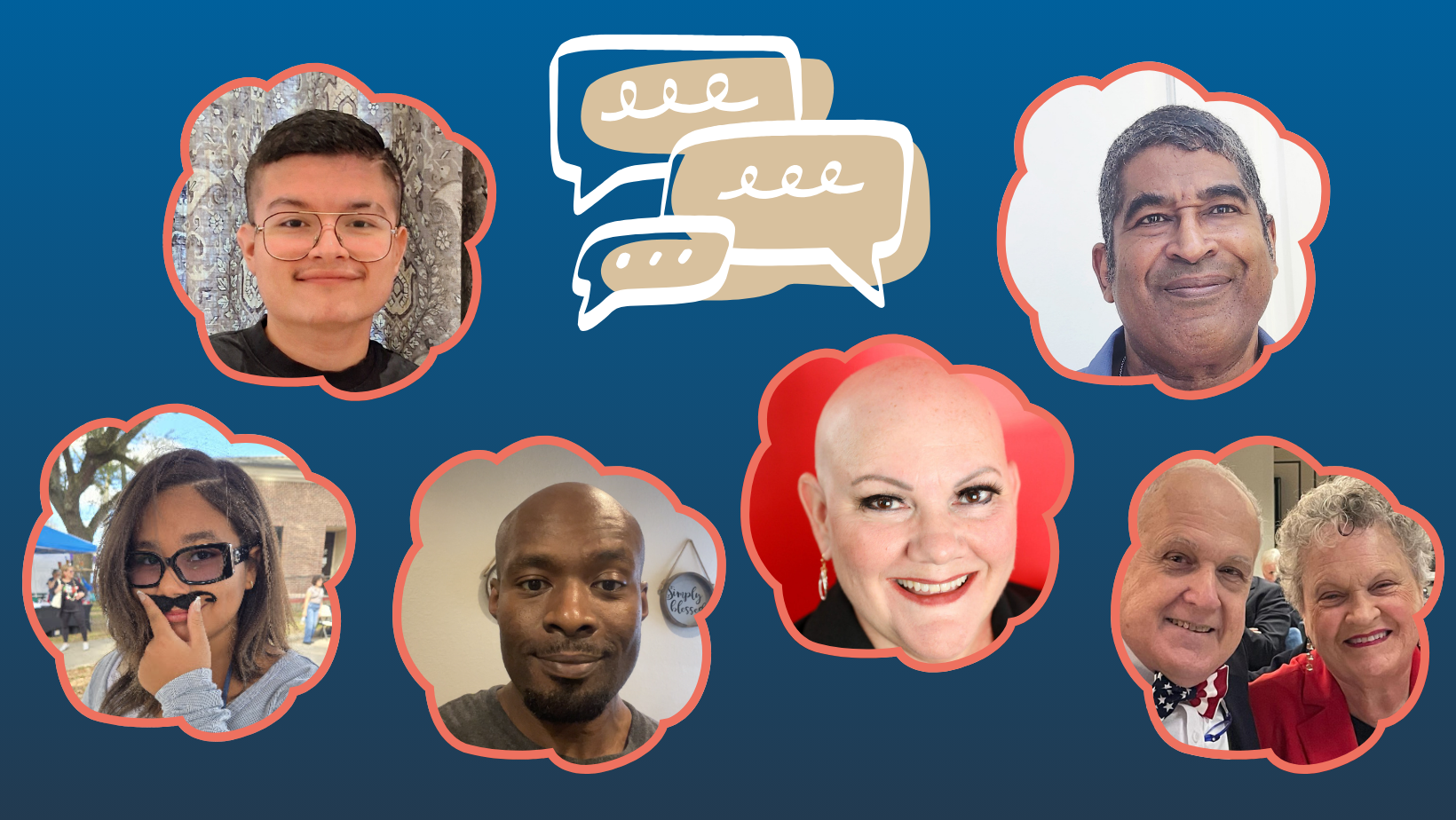
U.S. Pain Foundation asked seven individuals living with pain, including one care partner—from age 10 to 77—to share what pain looks like at their stage of life.
Here’s what they had to say.
Amerie: ‘Living with pain at my age feels really unfair.’
Amerie, 10, lives with fibromyalgia, neuropathy, chronic migraine, intracranial hypertension, orthostatic hypotension, hypermobility, and minor scoliosis. She received her first diagnosis at the age of 2, but shares that she’s lived with pain all her life.
Living with pain at my age means…
“Sometimes living with pain at my age feels really unfair. I know I’m only 10, but I understand what’s happening in my body, and I can explain it like an adult. When the pain gets bad, I can’t do the things other kids my age get to do, and it makes me feel sad and frustrated. It’s not that I don’t want to participate—it’s that my body won’t let me, even when my mind is ready. I miss out on things I really want to do, and that’s hard to carry every day.”
What I wish people understood about living with chronic pain:
“I wish people understood that chronic pain isn’t something I can turn off. There’s no switch I can flip to make it stop, and I can’t predict when a flare is coming. I’m stuck in my body every minute, even when it hurts so much I can barely think.
“People see me as a kid and say my pain sounds like something only older adults deal with, but that doesn’t make my pain any less real. It’s huge, and it affects everything I do. Even with all that, I’m still expected to go to school, do activities, be social, and show up like nothing is wrong. It’s exhausting trying to keep up when my body is fighting me all the time.”
Mathiaz: ‘I’m having to speak up more than I expected.’
Mathiaz, 22, has lived with pain for 14 years. He lives with idiopathic intracranial hypertension (IIH), arachnoid cyst, left venous sinus stenosis, psoriasis and psoriatic arthritis, and severe headaches and joint pain.
“Living with pain at my age means learning to advocate for myself. While most people my age don’t have to slow life down due to chronic pain, I do. So people tend to not understand why I’m moving slower, why I have become quiet, or why I have to call my days early. What they see on the outside isn’t what’s really going on inside of my body.
“So being in my early 20s, I’m having to speak up about my medical conditions and chronic pain more than I expected. That way others can understand my ‘whys’ and that it’s not just an excuse I’m making up.”
What I wish people understood about living with chronic pain:
“I wish people would understand that chronic pain doesn’t have an on and off switch. I and others like myself don’t get the opportunity to decide when we want pain and when we don’t. So when we say we’re in a pain flare, please be patient with us. We promise we’re not avoiding you or the things that need to be done. We just need some extra time so we can accommodate our bodies and our pain.”
Matthew: ‘I can move forward in life even with the challenges I face.’
Matthew, 33, lives with chronic neuropathy, Horner syndrome, vocal cord paralysis, first bite syndrome, dysphagia, and hypoglossal nerve palsy. He’s lived with chronic pain for nine years.
“Living with pain at my age means life goes on whether we like it or not. What I’ve learned is to make the most of the life that’s been given. I found myself isolating for the first couple years of my diagnosis of chronic pain. With time, I began to understand I don’t have to do it alone, even when I felt like no one could understand. And the more I learned to share my struggles and be honest, I realized life doesn’t just go on, but I can move forward in life even with the challenges I face with chronic pain.”
What I wish people understood about living with chronic pain:
“The invisible battle of keeping the right mindset in the midst of pain everyday can be daunting. Taking the time to empathize with others when we don’t know what they’re going through can go a long way. Through my struggles with chronic pain, I learned to empathize with others more myself. No burden should be carried alone.”
Katy: ‘I feel like I’ve fallen behind.’
Katy, 45, shares that explanations for her pain vary based on the specialist she’s seeing: One says she has complex regional pain syndrome; others say fibromyalgia, lumbar radiculopathy and failed back surgery syndrome, or osteoarthritis. All agree that she’s experiencing central sensitization. She has navigated chronic pain for 16 years.
Living with pain at my age means…
“People no longer tell me, ‘You’re too young for that!’
“It also means making difficult choices about family caregiving based on my own pain-related limitations. This started in my 20s, and hasn’t really gone away—I feel like I’ve fallen behind, while my fully-abled friends have spent the last 15 years building their careers, buying houses, and raising children.”
What I wish people understood about living with chronic pain:
“This is a tough question. I wish people understood a lot of things about living with chronic pain, like:
- There are good days and bad days, and they’ll probably only see me in person on a good pain day.
- When I cancel plans with friends or family, it’s not because I don’t want to see them.
- It’s a sensory processing issue affecting multiple senses.
- Or, as The Pain NP on social media recently said, ‘Rest chosen for enjoyment and rest forced by illness are not the same thing.’
“It’s hard to get upset with people for not knowing, though. I didn’t understand anything about it until I got it.”
Christie: ‘I have more agency over my health than I once knew.’
Christie, 56, has experienced pain since she was an adolescent, but her early symptoms weren’t tied to her conditions until years later. She lives with hypermobile Ehlers-Danlos syndrome (hEDS), postural orthostatic tachycardia syndrome (POTS), scoliosis, and small fiber neuropathy. She underwent cervical fusion for spinal instability twice, as the first attempt was unsuccessful.
“Living with pain at my age means working every day to cope, and believing in better days. I, like many patients, am forced to research solutions and specialists who might help me find potential short-term treatment options for pain, as there is no standardized treatment or cure for EDS yet—since the medical system does not yet understand Ehlers-Danlos syndromes and their systemic-wide complexity. But science is catching up.
“So, I remind myself regularly that I have more agency over my health than I once knew, developed through learning self-advocacy skills to reinforce my own sense of empowerment. Hope for better health begins and ends for me with regular healing habits like protecting my sleep, finding glimmers of joy in life despite the pain, and focusing on living as calmly as my nervous system allows—using mindful meditation and breathwork tools to keep ongoing health anxiety in check. I believe practicing healing habits are the key to getting to the heart of overall well-being first.”
What I wish people understood about living with chronic pain:
“Living with chronic pain is a state of life people do not ‘get,’ until they get it themselves, which is sad to me. We all want to be understood and feel validated, but more people truly understanding chronic pain means more people who are in pain. The stats are staggering at 1 in every 4 people in chronic pain in the U.S. alone, where healthcare is supposed to be first-class.
“This lack of recognition creates a vicious cycle, where patients scream not just for physical relief but also for emotional validation just to feel seen and heard—even by their caregivers, loved ones, and doctors. I wish more loved ones had skills to show compassion for us. I wish more caregivers had access to care for themselves. I wish more people in power would fund research and open more resources to source and secure responsible answers to chronic pain, as part of a society no longer pushing productivity as the only value worthy of investment. I wish the wider world would accept the challenge to ask themselves, ‘What have we learned from the pain medication crisis?’ and carry those lessons forward.”
Reginald: ‘The majority of us suffer silently.’
Reginald, 65, has managed chronic pain for more than two decades. He lives with multiple autoimmune illnesses and neuropathy-related pain, including persistent chronic pain in his lower left lumbar region.
Living with pain at my age means…
“Living with chronic pain at this stage of life can be especially challenging, and with multiple conditions, it makes it very difficult. Evening and morning are the most troubling. But it can be managed by taking medication as directed. I use a pill organizer to ensure that I don’t forget.”
What I wish people understood about living with chronic pain:
“What I want people to understand about pain is that it is real. It is invisible and not as apparent as other medical conditions. People have a preconceived idea about people with pain conditions. Some still have an idea that we are drug abusers. That is not who we are. The majority of us suffer silently. A percentage doesn’t reach pain control, but with proper medical care, we can have better outcomes.”
Marianne: ‘Both our bodies are degrading with age.’
Marianne, 77, has been a care partner to her husband, Tom, for close to four decades. Tom lives with chronic pain as a result of over-radiation, arthritis, neuropathy, type 2 diabetes, limited lung capacity, bladder cancer, coronary artery disease, PTSD, hypertension, spinal stenosis, chronic kidney disease, reactive depression, slight anemia, and tailbone nerve entrapment.
“Serving as a care partner to someone living with pain at my age means that while we navigate each day, each hour, accommodating his chronic pain, his flare-ups, his having to stop everything and go to bed, we are now doing this while both our bodies are degrading with age. The many mundane tasks I’ve always done—shopping, car maintenance, home improvements—are now more difficult, requiring more time and more energy. Just this week, I bought a new office chair. I had to ask a younger man to help get it in my basket, then ask a store employee to get it in my car, where it has sat for two days because I can’t get it out on my own and must wait for a helper who will come on Friday. Life!”
What I wish people understood about living with chronic pain:
“I wish people would understand that chronic pain is invisible. My husband may look healthy, quiet, attentive, downcast, impatient, exhausted, or any number of other expressions. He may actually be feeling pretty good, or his adrenaline is high, or he is pretending to be healthy, or he is truly engaged—but always, at any moment, or the very moment you see him, he is in chronic pain agony.”
Subscribe to our newsletter

U.S. Pain Foundation is a 501 (c)(3) nonprofit organization dedicated to serving those who live with conditions that cause chronic pain, as well as their caregivers and care providers. Learn more.
Our Sponsors
U.S. Pain Foundation relies on the generosity of donations and grants. We are especially thankful to our Corporate Council for sustaining our programs and services year-round. Learn more.
Contact Us
U.S. Pain Foundation, Inc.
15 North Main Street, Unit 100
West Hartford, CT 06107
Telephone: 800.910.2462
Email:
contact@uspainfoundation.org
Tax ID number: 26-2703521
All Content Copyright 2025 | All rights reserved. U.S. Pain Foundation is a qualified 501(c)(3) tax-exempt organization. Disclaimer