
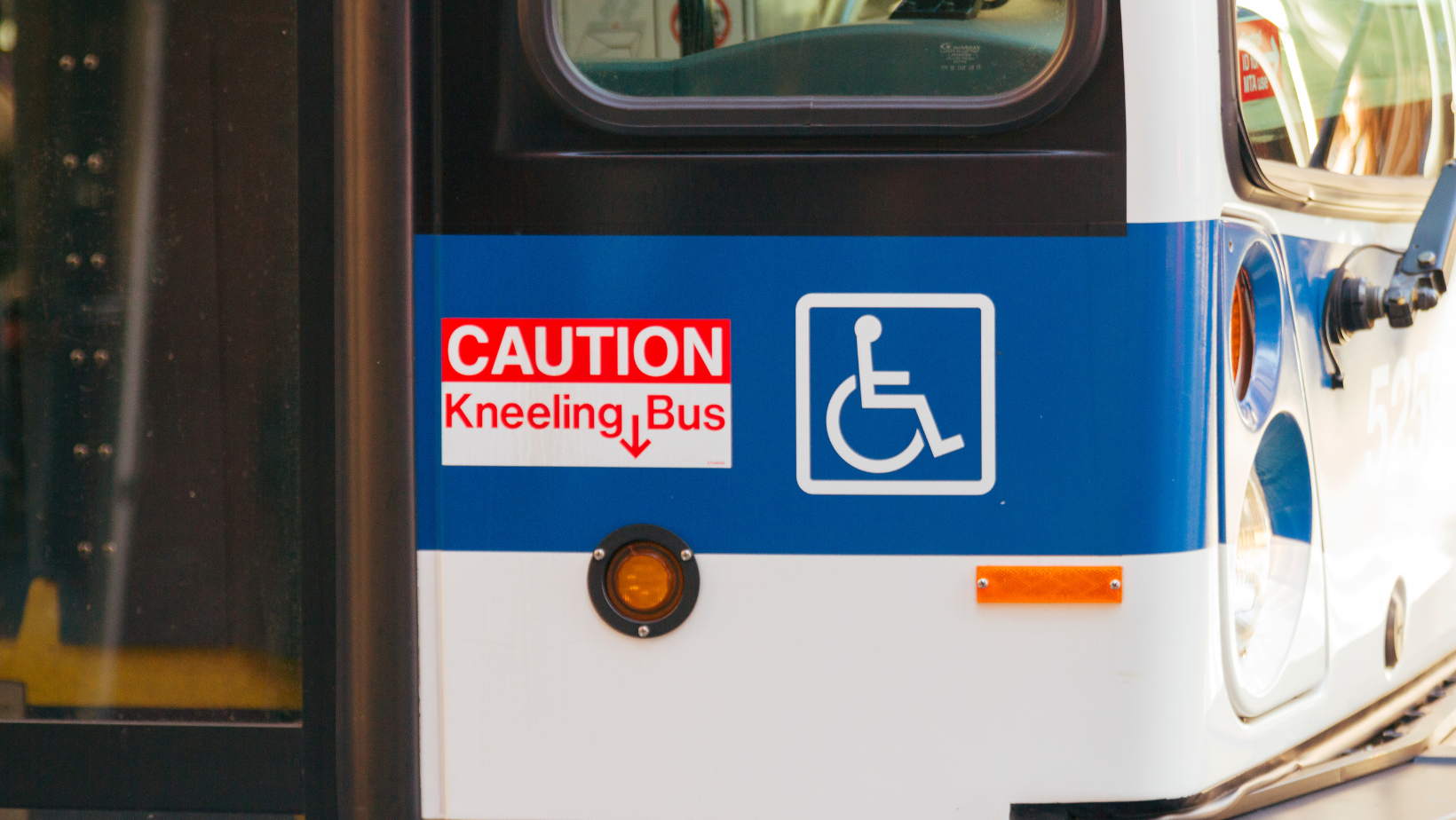
I was stunned, though not entirely surprised, when the bus driver demanded, “You don’t look disabled. What is your disability?” I had just painfully lowered myself into the seat behind her, reserved for disabled passengers, softly telling myself, “Oh, I’m disabled, so I can sit here,” while feeling the sharp sting of having to prove my very existence to someone who could not see my pain.
Being singled out in front of the others was humiliating. I explained that I live with complex regional pain syndrome, one of the most excruciating and rare conditions known to modern medicine– more painful than childbirth, amputation of a finger, or non-terminal cancer, as evidenced by the McGill Pain Scale.
No one should have to face judgment or doubt while living with pain this severe.
There was no compassion, no recognition of my struggle, and no apology. Instead, I was faced with a harsh, cutting reminder of my vulnerability as she said, “Well, if anyone using a cane or wheelchair comes on board, you’ll need to move.”
For a moment, I felt a glimpse of the humiliation Rosa Parks must have experienced on that Montgomery, Alabama bus in 1955 when the driver forced her out of the “colored” section to make room for white passengers. The injustice and vulnerability of the moment struck me deeply. Unlike Rosa Parks, my stigma is not linked to the color of my skin but to an invisible disability, chronic pain, a burden millions of Americans bear quietly every day.
This is why National Pain Awareness Month matters. It brings the unseen suffering into view and demands understanding. This is why San Jose Mayor, Matt Mahan, issued a proclamation declaring September as National Pain Awareness Month.
This year’s theme from the U.S. Pain Foundation—“Unmasking Pain: Because pain is more than a chart. It’s a life.”—couldn’t be more personal.
Sometimes you can look young, even vibrant on the outside, yet carry pain that no one else can see. The stares, the whispers, and the doubt from strangers when you use a mobility aid or a reserved space can cut deep, forcing you to justify what is already hard enough to live with. For so many of us with chronic pain, this is the invisible reality: needing to prove our right to exist comfortably in a world that only believes what it can see.
Pain is undeniable. It touches every part of life. According to the CDC, nearly one in four U.S. adults—24.3%—live with chronic pain. Of those, 8.5% experience high-impact chronic pain that limits daily life. In California, that is roughly 6 million people, approximately 1 million of which live in the San Francisco Bay Area. For every 10,000 people with severe pain, there is only one board-certified pain specialist.
This isn’t just a number. It’s you or someone you love, living every day with pain that no one notices. Waiting months for an appointment, driving hours for care, and feeling exhaustion settle into every part of your life—it wears you down, silently and relentlessly. No one should have to explain or prove their suffering just to be treated with basic respect. We cannot stay quiet. It is time to demand understanding, compassion, and real change for everyone facing this invisible struggle.
In the U.S. Pain Foundation’s 2025 national survey:
- 95% said pain left them emotionally drained
- 88% reported anxiety or depression
- 73% felt socially isolated or misunderstood
- 70% said their relationships suffered.
Behind those numbers are the unseen tolls of living with relentless pain. I know that road well. Pain steered the course of my days, altered the fabric of my relationships, and changed the direction of my future.
The battle hasn’t been just with the pain itself but also with constantly having to prove it to insurance companies and to strangers when I park in a handicapped spot, sit in disabled seating, or use a mobility device. That is why we must unmask pain. It is not just a symptom; it is someone’s life.
When we bring pain into the light:
- We validate the experience of millions suffering in silence
- We build empathy in our communities
- We advocate for better care: more specialists, integrated physical and mental health services, accessible rural treatment, and coverage that doesn’t force patients to choose between medicine and groceries.
Nicole Hemmenway, the CEO for the U.S. Pain Foundation said, “Let’s make “pain awareness” more than a phrase this September. Let’s make it a reckoning—a moment when we stand up for the unseen, unheard, and underserved. Let’s turn empathy into action. Let’s demand better care, deeper understanding, and policies that reflect the lived realities of millions. Because pain shouldn’t be a private burden but a public priority.”
To learn more about the U.S. Pain Foundation’s work, explore their 2025 National Survey Reports and discover how you can help at uspainfoundation.org. Pain is more than a chart. It’s a life. And every life deserves to be seen, believed, and supported.
—by Michele Rice
Subscribe to our newsletter

U.S. Pain Foundation is a 501 (c)(3) nonprofit organization dedicated to serving those who live with conditions that cause chronic pain, as well as their caregivers and care providers. Learn more.
Our Sponsors
U.S. Pain Foundation relies on the generosity of donations and grants. We are especially thankful to our Corporate Council for sustaining our programs and services year-round. Learn more.
Contact Us
U.S. Pain Foundation, Inc.
15 North Main Street, Unit 100
West Hartford, CT 06107
Telephone: 800.910.2462
Email:
contact@uspainfoundation.org
Tax ID number: 26-2703521
All Content Copyright 2021 | All rights reserved. U.S. Pain Foundation is a qualified 501(c)(3) tax-exempt organization. Disclaimer