
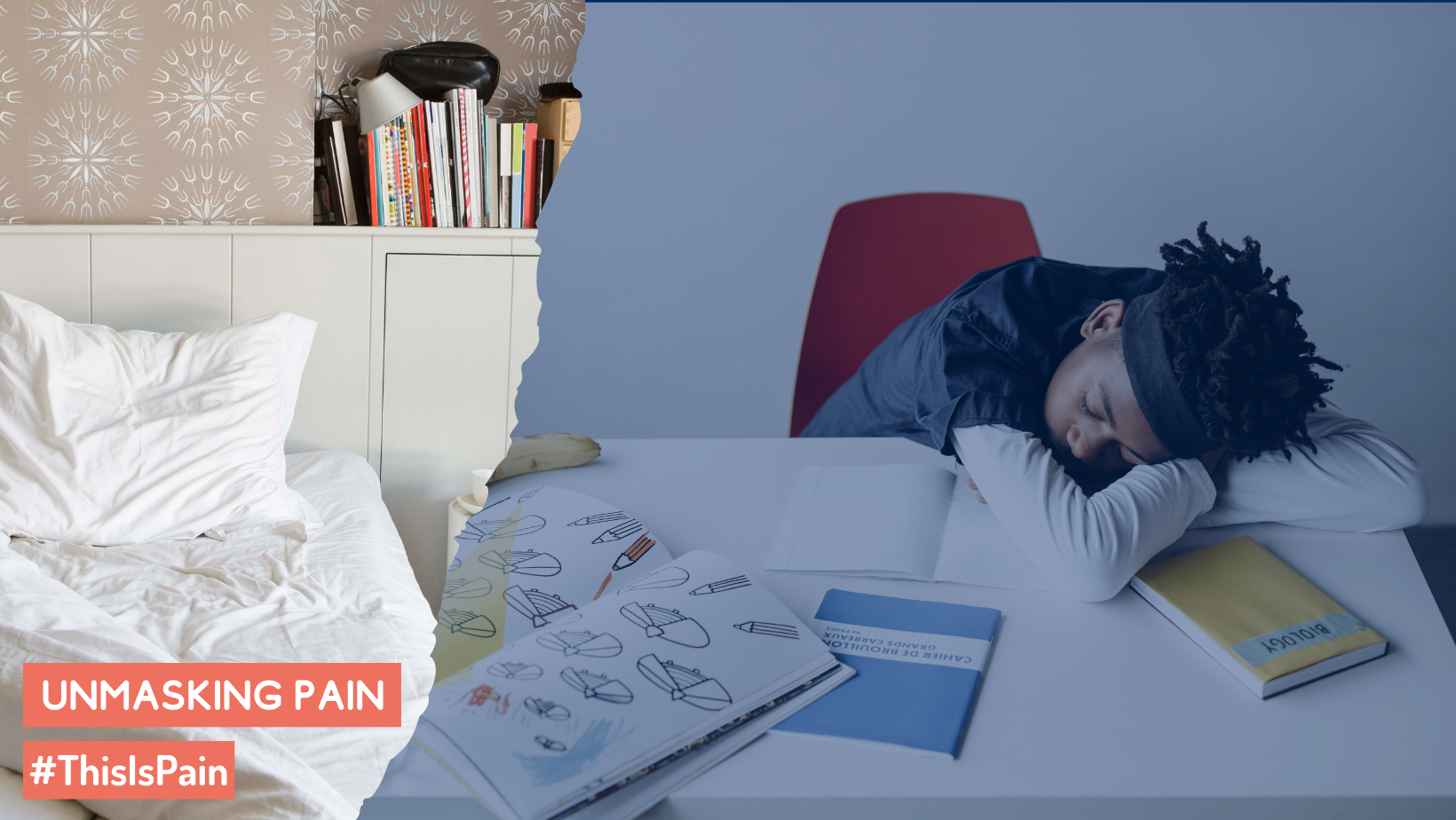
Sleep is supposed to be a refuge—a time when a child’s body restores and recharges. But for children living with chronic pain, nightfall often brings anything but rest. Pain delays sleep, jolts them awake, or tips into cycles of oversleeping and exhaustion. Even when they do sleep, it’s rarely restorative—leaving them groggy, unrefreshed, and struggling to function the next day.
The cost is steep. Disrupted or unrestful sleep intensifies pain, creating a vicious cycle that spills into every corner of life—school performance, mood, friendships, and family dynamics. This three-pronged challenge—too little sleep, too much sleep, or sleep that fails to restore—remains one of the most-overlooked yet critical factors in pediatric pain care.
What the Numbers Say
According to the U.S. Pain Foundation’s 2025 survey, The Hidden Reality of Chronic Pain in Youth, sleep is not a footnote in pediatric pain—it’s central to the narrative. More than half of kids (56%) said lack of sleep makes their pain worse, while nearly four in 10 (39%) reported that pain itself keeps them from resting.
Parents echoed the struggle in U.S. Pain’s What it Truly Means to Parent a Child or Teen with Chronic Pain survey, with most saying pain has an impact on their child’s sleep:
- Difficulty falling asleep (75%)
- Trouble staying asleep (62%)
- Sleeping too much (30%)
Despite the toll inflicted by poor sleep, only 40% of families said they are using even basic sleep hygiene strategies—an alarming gap when sleep disruption clearly magnifies the pain experience. And the consequences don’t stop at night. Fatigue and pain spill into the school day, with almost half of students arriving late to school, leaving early, or missing entire days.
Taken together, these numbers are more than statistics—they’re signals of a deeper crisis. Sleep disruption isn’t a side effect of pediatric pain; it’s a compounding force that intensifies symptoms, derails routines, and strains families.
The Multifaceted Problem of Sleep
For many kids with chronic pain, nighttime doesn’t bring relief—it brings new obstacles. Some lie awake for hours as pain keeps them restless, leading to foggy mornings, exhaustion, and poor concentration in school.
Others slip into the opposite extreme: sleeping far too long. Sometimes this stems from medications, but in other cases, it’s linked to chronic fatigue itself—a body so drained it struggles to recharge, making it even harder to keep up with routines, friendships, and daily responsibilities.
But the challenge isn’t just about how long kids sleep—it’s about the quality of that sleep. Children may spend long hours in bed, yet wake feeling depleted. Pain, fatigue, stress, and medications can fragment sleep cycles, blocking access to the deep and REM stages critical for memory, learning, and emotional balance. The result? Nights that look like “rest” on the surface but leave kids drained, foggy, and more vulnerable to flare-ups the next day.
Both extremes carry weighty consequences:
- Intensified pain flares
- New pain or abnormal symptoms
- Dizziness or lack of coordination
- Disrupted circadian rhythms
- Worsened moods
- Cognitive struggles
- Missed school
- Social withdrawal and difficulty re-engaging in academics and activities
“Sleep is critical to physical and emotional development—and for young people with chronic pain, it’s even more important,” says Susmita Kashikar-Zuck, PhD, a pediatric pain psychologist and researcher at Cincinnati Children’s Hospital Medical Center. “Not getting enough sleep can heighten pain sensitivity, and in turn, ongoing pain can disrupt normal sleep. This cycle can affect all aspects of daily life.”
Why Sleep Matters So Much
Sleep and pain feed each other in a relentless cycle. Pain (which kids described as achy, stabbing, burning, freezing, shocking, squeezing, drilling, twisting, or radiating) is often compounded by other symptoms tied to underlying health conditions, making it harder to rest. Then, the lack of restorative sleep lowers pain thresholds, fueling the next day’s flares. Layer on the pressures of daily life—medical appointments, schoolwork, social relationships, and stress—and even the most consistent sleep routines can quickly unravel.
Parents see the cost firsthand. Survey respondents said that improved quality of life (89%) and emotional well-being (82%) ranked alongside pain relief (85%) as their top pain-management goals for their children. Sleep touches all three.
The overlap between pain and poor sleep isn’t unique to kids. The National Sleep Foundation’s 2015 Sleep in America® Poll highlighted just how profound the connection is for adults with chronic pain:
- They averaged 6.7 hours of sleep per night, compared to 7.3 hours for those without pain—and only individuals without pain said they were getting the sleep they needed.
- Only 37% rated their sleep quality as “good,” versus 65% of those without pain.
- More than 52% said poor sleep disrupted their work—double the rate of those without pain. Negative impact was also doubled in the areas of daily activities, relationships, and enjoyment of life.
A decade later, these findings remain a powerful illustration of how pain and sleep undermine one another. And if this is the reality for adults with already developed coping systems, the toll on children and teens is even greater. For kids still growing, learning, and building relationships, disrupted sleep doesn’t just steal rest—it reshapes development, function, psychological well-being, and family life.
Yet here’s the challenge: while documentation exists to illustrate the relationship between sleep and pain for adults, pediatric-specific research is far more limited.
“Studies have demonstrated that not getting enough good quality sleep makes children feel pain more strongly and leads to worse overall functioning,” explains Tonya Palermo, PhD, director of the Center for Child Health, Behavior and Development at Seattle Children’s Research Institute. “Sleep affects inflammation, hormonal responses, and neural circuitry in the brain—pathways that ultimately alter health and function. We’ve also found that sleep disruption impacts children’s ability to self-manage pain and their overall functioning.”
What Needs to Change
Disrupted sleep for kids with pain spills into doctor’s visits, classrooms, and family routines—which means solutions must reach all three. When sleep breaks down, so does daily life.
At the Doctor
Sleep should be treated within the health system with the same importance as pain levels, medication side effects, or functional goals. Every pediatric pain appointment should ask:
- How long does it take to fall asleep?
- How often is sleep interrupted?
- Do they feel rested when they wake up—or even more tired?
Without asking about sleep, providers are missing a core piece of the puzzle. What’s more, the scheduling and timing of treatments—like physical therapy, medications, or even mental health appointments—can either support or sabotage healthy sleep rhythms.
“The influence of sleep on pain is often under-appreciated in the treatment of chronic pain in young people,” Kashikar-Zuck shares.
Palermo agrees, noting that most pain care providers “do not have adequate knowledge of sleep—how to evaluate it in children and what to do when there are problems. There is also an incredible shortage of behavioral sleep providers… We need to provide more education and training to all health care providers in childhood sleep problems, and establish screening measures and best practices in clinics for routine assessment of sleep health in children with pain.”
If sleep disruption is severe, families should be offered access to tailored support, including:
- Pediatric sleep specialists
- Behavioral sleep interventions like Cognitive Behavioral Therapy for Insomnia (CBT-I) adapted for kids
- Relaxation training or biofeedback, especially for children who experience bedtime anxiety linked to pain
These aren’t just “extra” services—they’re evidence-backed tools that can directly reduce next-day pain flares and emotional distress.
At School
Too often, tired kids are misunderstood. A student who’s exhausted might be seen as lazy, unfocused, or unmotivated—when in reality, they’re pushing through another night of stabbing or radiating pain, trying to show up anyway.
As kids shared in their own words in U.S. Pain’s pediatric survey:
“A long school day is extremely painful, and I’m pushing myself every day.”
“And after a really hard week, I need time to crash out to regain my strength.”
Schools can play a key role by recognizing, validating, and planning for sleep-related barriers in education. This means:
- Flexible start times or remote learning days
- Built-in rest breaks and quiet spaces
- Adjusted PE or physical activity requirements
- Extended time for assignments and exams
- IEPs or 504 plans that explicitly address fatigue, pain flares, and rest
Equally important is training teachers and school staff to recognize that sleep-related challenges are neurologically and medically rooted, not behavioral.
At Home
The focus shouldn’t be on achieving “perfect sleep” but on building predictable, calming routines. Small sleep-hygiene steps can make nights less chaotic. Families can also prepare “flare-night plans”—comforting activities, relaxation tools, or non-screen options to turn to when pain makes sleep impossible.
Palermo and her colleagues have developed practical resources for families, including the WebMAP Mobile app, which offers simple, evidence-based strategies for improving sleep. She highlights six key tips:
- Keep a consistent bedtime and wake schedule (no more than 1–2 hours’ difference, even on weekends)
- Avoid weekend “catch-up” sleep
- Limit naps to short, early-afternoon rests
- Make bedrooms quiet, dark, and cool
- Build a relaxing 20-to-30-minute bedtime routine
- Remove or limit electronics from bedrooms
As Kashikar-Zuck notes, “With careful attention to good sleep habits, you can begin to allow your brain time to recover, de-stress, and turn down the volume on pain so that it’s easier to function the next day.”
Find more tips and strategies in U.S. Pain’s Living Well With Chronic Pain resource (with versions geared toward kids and teens.)
Conclusion
These survey insights point to one undeniable truth: poor sleep is at the heart of pediatric pain. Sleepless nights and nonrestorative oversleep create cycles of fatigue, missed opportunities, and amplified pain, rippling across every part of a child’s life.
Together, these findings highlight a simple but powerful reality: without addressing sleep, we cannot meaningfully improve life for kids with pain. Resolving these challenges is central to their future.
When children finally get the deep, restorative rest their bodies need, it doesn’t just improve their nights—it transforms their days. Because when kids with pain can truly sleep, they can grow, learn, connect, and thrive.
To learn more about the U.S. Pain Foundation’s Pain Awareness Month initiative, click here.
Subscribe to our newsletter

U.S. Pain Foundation is a 501 (c)(3) nonprofit organization dedicated to serving those who live with conditions that cause chronic pain, as well as their caregivers and care providers. Learn more.
Our Sponsors
U.S. Pain Foundation relies on the generosity of donations and grants. We are especially thankful to our Corporate Council for sustaining our programs and services year-round. Learn more.
Contact Us
U.S. Pain Foundation, Inc.
15 North Main Street, Unit 100
West Hartford, CT 06107
Telephone: 800.910.2462
Email:
contact@uspainfoundation.org
Tax ID number: 26-2703521
All Content Copyright 2025 | All rights reserved. U.S. Pain Foundation is a qualified 501(c)(3) tax-exempt organization. Disclaimer