
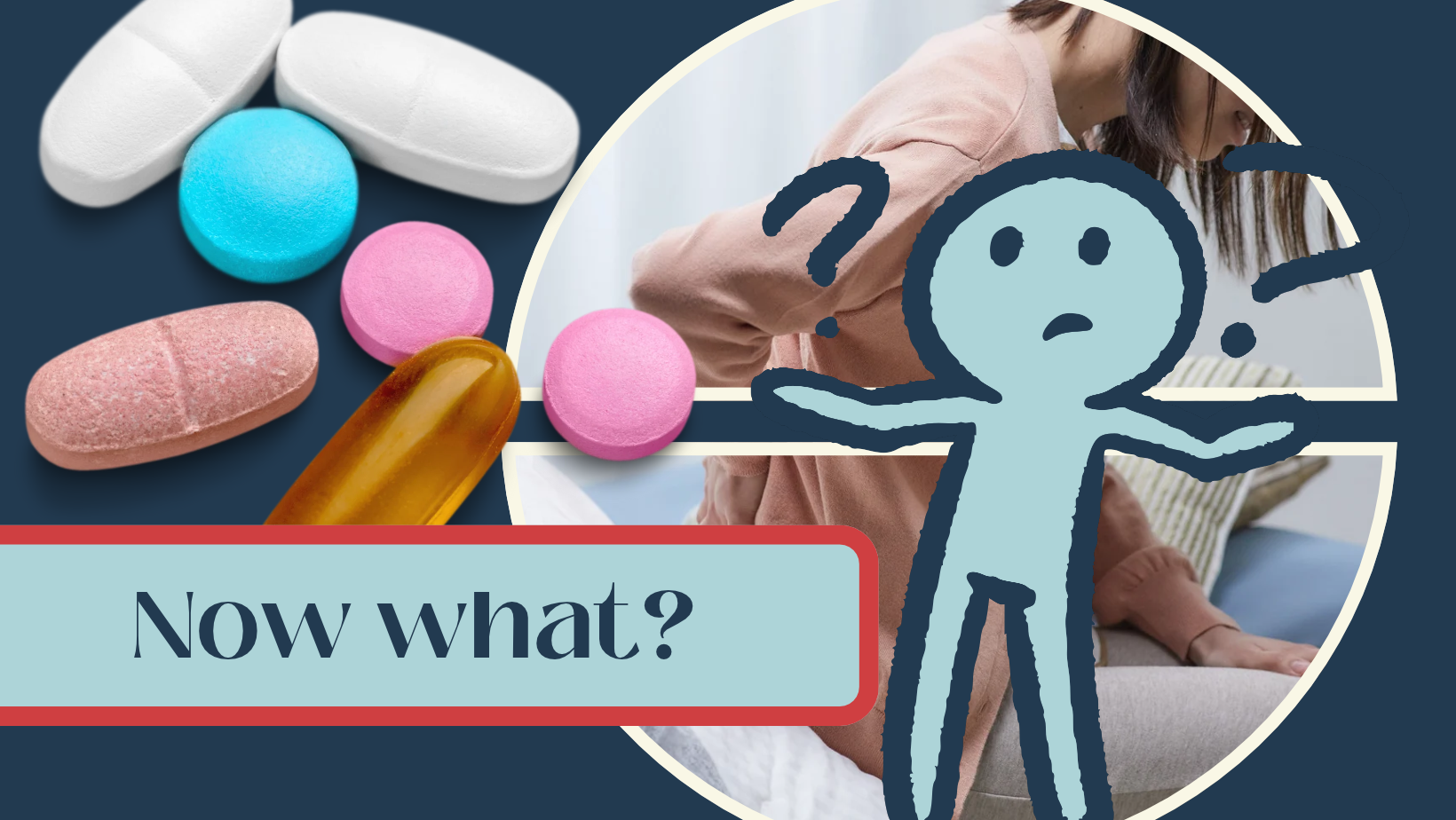
Over-the-counter (OTC) pain relievers are a commonly used tool for people living with pain. But you may find that adequate relief still feels out of reach.
And you’re far from alone.
In U.S. Pain Foundation’s 2026 survey of adults living with persistent pain:
- 55.5% said OTC pain relief wasn’t strong enough.
- 36.7% said the relief didn’t last long enough.
- 61.9% said having additional OTC pain relief options would be very helpful
These findings reflect something the pain community has been telling us for years: Finding effective pain relief isn’t always simple, and people need options that meet their individual needs.
So what can you do when OTC pain relievers aren’t helping enough?
Why Doesn’t the Same Pain Reliever Work for Everyone?
Pain is complex, and the same medication can work differently from one person to another.
Some OTC pain relievers, such as ibuprofen, naproxen, and other nonsteroidal anti-inflammatory drugs (NSAIDs), help reduce inflammation along with targeting pain. Acetaminophen relieves certain types of pain but doesn’t significantly reduce inflammation. Other OTC products work in different ways.
The cause and type of pain can influence which treatments are most helpful.
For example, pain associated with inflammation may respond differently than nerve-related pain. And for people living with chronic or complex pain conditions, responses to OTC medications can vary considerably.
Some people find that OTC medications provide meaningful relief and are an important part of managing their chronic pain. For others, the benefit may be limited, or additional treatment approaches may be needed.
Determining the best options comes down to whether they provide meaningful relief, can be used safely, and meet your individual needs. And that looks different for everyone.
Acute Pain, Chronic Pain, and When They Intersect
Pain is often described as either acute or chronic, but these experiences can overlap.
Acute pain typically begins suddenly and may be associated with an injury, illness, surgery, or another identifiable cause. It often improves as the underlying condition heals.
Chronic pain generally lasts longer than three months and may continue beyond the expected healing period or occur alongside an ongoing health condition.
But what about when someone already living with chronic pain experiences acute pain, too?
You might manage arthritis or fibromyalgia every day and then sprain an ankle, develop a toothache, or come down with an illness. You may need surgery or another medical procedure while continuing to manage your usual pain.
And sometimes, pain from an existing chronic condition becomes more intense during a flare.
These situations may require different approaches to pain relief. A medication that helps manage your everyday symptoms may not adequately address a new injury or illness.
Having chronic pain doesn’t mean every new or worsening symptom is simply part of your existing condition.
If your pain is new, noticeably different, or getting worse, let your healthcare professional know. Sudden, severe pain, or pain accompanied by concerning symptoms, may require urgent medical evaluation.
Is Your Medication Not Helping Enough, or Is It Wearing Off Too Soon?
These may sound like the same problem, but there are important differences, especially when pain affects your ability to work, sleep, care for yourself or your family, or participate in activities you enjoy.
Pain relief isn’t just about a number on a pain scale. It’s also about what that relief allows you to do.
When considering how well a pain medication works, there are three factors to take into account:
- Onset: How long does it take for the medication to begin providing relief?
- Effectiveness: How much relief does it provide?
- Duration: How long does that relief last?
One medication may begin working quickly but provide little relief. Another may offer some improvement, but the effects wear off too soon. Still another may offer meaningful relief, but take longer to start working.
Taking another dose of the same medication too soon, increasing the amount, or taking multiple medications in the same drug family too close together (for instance, ibuprofen and naproxen sodium, as both are NSAIDs) can cause serious side effects.
It may be an option to combine or alternate different OTC pain-relief ingredients and products (such as acetaminophen and an NSAID), if you follow the Drug Facts labels for all your medications, take your health conditions and risks into account, and discuss the plan with your healthcare provider or a pharmacist.
But if you’ve tried several OTC options or approaches and still aren’t getting relief, it may be time to speak to your healthcare professional about whether your overall pain management plan needs another look.
When Is It Time to Revisit Your Pain Management Plan?
Pain management needs can change over time.
A medication that once worked well may become less effective. Your symptoms may change, you may develop another health condition, or your current treatment plan may no longer provide enough relief to support the activities that matter most to you.
Consider reaching out to your healthcare professional if:
- You’re using OTC pain medications regularly but still experiencing significant pain.
- Your medication provides relief, but it doesn’t last long enough.
- Pain is interfering with sleep, work, school, relationships, or everyday activities.
- You’re concerned about side effects or how often you’re taking medication.
- You’re thinking about increasing a dose or adding another product because your current treatment isn’t helping enough.
- Your pain has changed, worsened, or feels different from your usual symptoms.
Even when OTC medications are working well, regular or long-term use is worth discussing with your healthcare professional or pharmacist to make sure the treatment remains appropriate and safe.
What Other Options Are Available When OTC Medications Aren’t Enough?
When OTC pain relievers aren’t providing adequate relief, it can help to take another look at your overall treatment plan.
Depending on the type and cause of pain, other treatment options may include prescription medications, physical or occupational therapy, behavioral health support, complementary approaches such as acupuncture or massage, and procedures such as injections, nerve blocks, or surgery in some cases.
For many people living with chronic pain, the most effective pain-management plan combines multiple treatment options. Your medical provider, or in some cases a specialist who understands your condition, can help evaluate and consider adjustments to your current treatment plan. OTC medications may also continue to play an important role, even when other treatments are added.
How Do You Talk About Pain Relief That Isn’t Enough?
For many people living with chronic pain, explaining inadequate relief can be difficult.
Maybe you’ve already tried numerous treatments. Perhaps you’ve had appointments where you didn’t feel heard. Or you may struggle to explain how your pain has changed or why your current medication isn’t helping enough.
You don’t need to know exactly what treatment you want before starting the conversation.
It can help to describe what’s happening and how it’s affecting your life.
Instead of saying only, “My medication isn’t working,” consider sharing specific details:
- “My medication reduces my pain somewhat, but I still can’t stand long enough to prepare dinner.”
- “I get a few hours of relief, but my pain returns well before my next dose.”
- “This pain feels different from what I normally experience, and my usual treatment isn’t helping.”
These details help your healthcare team understand what you’re experiencing and what you hope to improve.
Questions Worth Asking
- Why might this medication not be helping my type of pain?
- Are there other treatment options that might be appropriate for me?
- What should I do when my pain returns before my next permitted dose?
- Is it safe for me to continue using this OTC medication regularly?
- Could another condition or change in my health be contributing to my symptoms?
- Would additional evaluation or a referral to a specialist be helpful?
- What improvement should I realistically expect, and when should we reassess my treatment plan?
And if you aren’t sure where to begin, your pharmacist or a nurse at your healthcare professional’s office may be able to help answer questions or connect you with the appropriate member of your care team.
What If Your Child Isn’t Getting Enough Pain Relief?
Recognizing when a child’s pain isn’t adequately controlled can be especially challenging, particularly when they have difficulty explaining what they’re experiencing.
Pain may show up through changes in behavior, sleep, movement, school participation, or usual activities. A child may become more withdrawn or irritable, avoid playing, have difficulty sleeping, or stop participating in activities they normally enjoy.
For children and teens living with chronic pain, it’s also important to pay attention to when their usual symptoms change, rather than assuming every difficult day is simply part of their condition.
If your child’s pain isn’t improving, returns before the next permitted dose, interferes with daily activities, or seems different from their usual pain, contact their pediatric healthcare team. Don’t increase a child’s medication dose, give medication more often, or add another pain reliever without appropriate guidance.
Why Having More Pain Relief Options Matters
In U.S. Pain’s 2026 survey, 61.9% of respondents said having additional OTC pain relief options would be very helpful.
While existing OTC medications provide the relief that some people need, others face challenges related to effectiveness, how long relief lasts, side effects, other health conditions, or the safety of combining treatments.
Access to certain medications may expand or evolve in the future due to a pathway established by the U.S. Food and Drug Administration (FDA), called Additional Condition for Nonprescription Use (ACNU). This rule creates an additional safety step, such as a screening questionnaire to ensure a medication is appropriate for an individual, for certain over-the-counter medications that may previously have been unavailable or only available with a prescription.
But expanding options means more than increasing what’s available on pharmacy shelves. It also means supporting research, improving access to effective treatments, recognizing individual differences, and making sure people living with pain have a voice in decisions about their care.
When a treatment isn’t providing enough relief, the conversation shouldn’t end with what you’ve already tried. It should include what else may be possible.
Your Next Step: Start With What Isn’t Working
If your OTC medication isn’t providing the relief you need, you don’t have to know exactly what should change before asking for help.
Start with what you’re experiencing.
How much relief are you getting? How long does it last? What can you do when the medication is helping? What activities are still difficult? Has anything changed?
Our What Did I Take? My Medication Tracker can help you record the medications you’ve used, when you took them, and the relief you experienced. This information can help guide conversations with your health care team.
You deserve pain care that takes your experiences seriously, considers your goals, and continues to explore options when your current treatment isn’t providing enough relief.
KNOW What You’re Taking. KNOW What to Ask. KNOW Your Options for Pain Relief.
#KNOWyourOTCs
This article is for educational purposes only and is not a substitute for individualized medical advice. Medication combinations, dosing, and timing should be reviewed with a qualified healthcare professional. Always follow Drug Facts labeling, and seek immediate guidance from Poison Control (1-800-222-1222 in the United States) if you suspect a medication overdose, even if symptoms have not appeared.
Subscribe to our newsletter

U.S. Pain Foundation is a 501 (c)(3) nonprofit organization dedicated to serving those who live with conditions that cause chronic pain, as well as their caregivers and care providers. Learn more.
Our Sponsors
U.S. Pain Foundation relies on the generosity of donations and grants. We are especially thankful to our Corporate Council for sustaining our programs and services year-round. Learn more.
Contact Us
U.S. Pain Foundation, Inc.
15 North Main Street, Unit 100
West Hartford, CT 06107
Telephone: 800.910.2462
Email:
contact@uspainfoundation.org
Tax ID number: 26-2703521
All Content Copyright 2025 | All rights reserved. U.S. Pain Foundation is a qualified 501(c)(3) tax-exempt organization. Disclaimer