
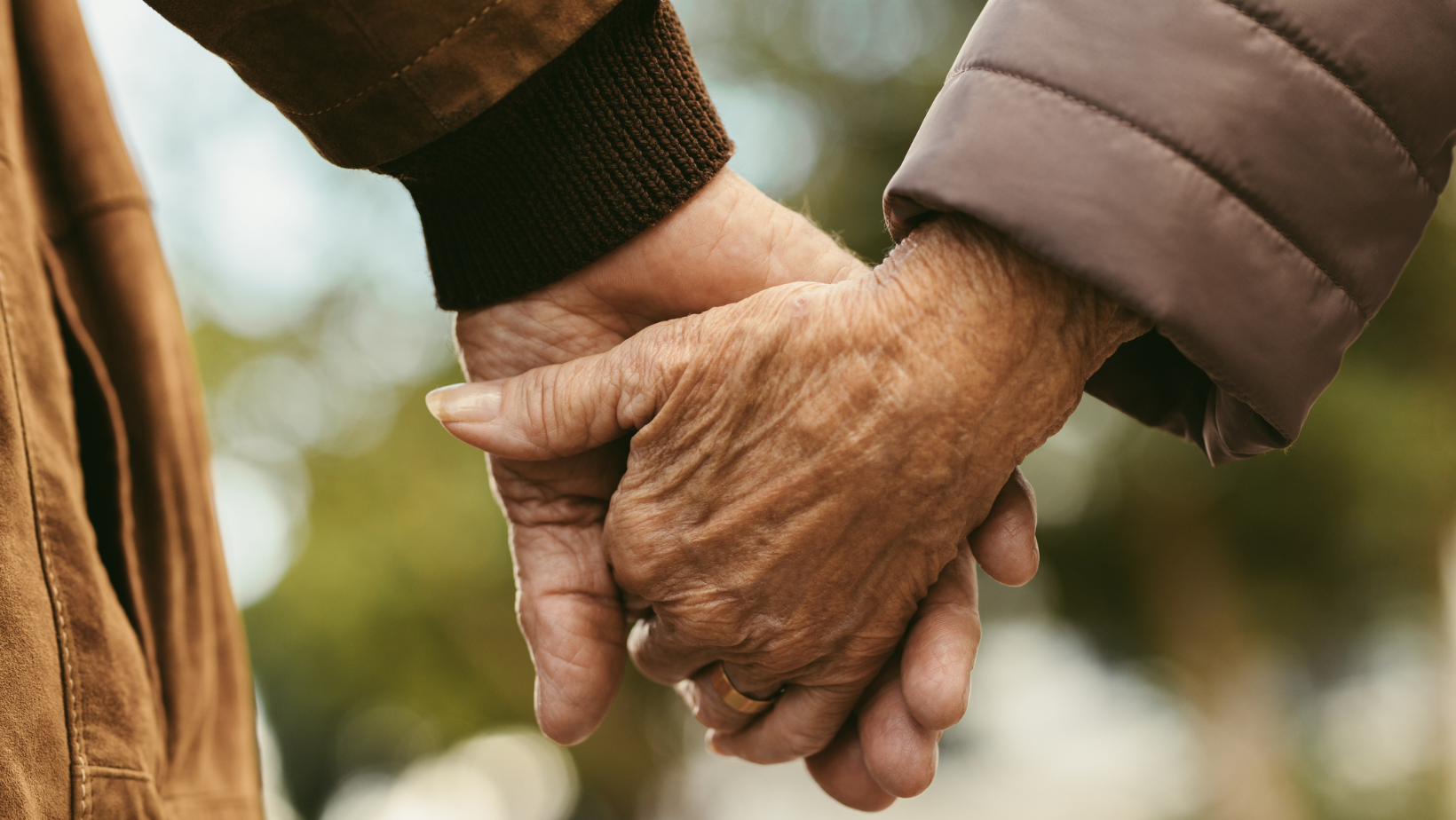
For years, my husband has been helping me live my life with as much dignity as possible as I deal with Ehlers-Danlos syndrome.
I’ve had over 30 surgeries that have helped me to continue to have improved quality of life at the age of 76—and my husband has helped me maintain that quality of life with a number of tasks that prevent or correct my subluxations, or partial dislocations.
He’s been taught simple physical therapy exercises that he’s able to safely perform for me each morning. He cuts the food I use to prepare meals. He reaches up to close the car door, carries in the food bags, lifts items that are too heavy for me, has driven when I was not able to rotate my fused neck, and so much more.
But as we both get older, he’s dealing with health issues of his own, including Parkinson’s disease and severe back pain that required two surgeries this summer.
Knowing he was facing a hospitalization and recovery period, I knew I would need to take over our life at home myself, including caring for our two dogs and the plants in our medical grow. I would need to drive to visit him, attend my PT appointments, shop for food, and travel to and from the fitness pool.
For most, this is not an issue, but because of my disability, I had to figure out how to make this all work without repeatedly subluxing my joints. I’ve never begun my days without his PT adjustments, so that alone created a bit of anxiety as to how those days would progress without his help.
Planning ahead was key. Here are some of the preparations we made:
- We shopped for food ahead of time so that he could help me stock up on heavier items.
- I carefully thought ahead about meals, planning to turn to a food chopper if needed to help me stay safe, since cutting ingredients can cause my shoulders to sublux.
- I ordered soil for our medical grow early so that he could carry it into our basement.
- He taught me how to fertilize our medical grow at all stages of growth—normally, I take care of the clones and harvest the plants, while he manages other tasks.
- I increased my PT appointments to three times a week instead of two, to try to keep myself as aligned as possible. We also tried skipping his morning PT adjustments on the days leading up to his surgery, so I could try to get used to the lack of adjustments.
- I worked on being able to safely walk two dogs; one is my service dog, and the other is my husband’s buddy, who was going to be so jolted to not see him at home.
The “I can’t” list (open and close windows without hurting my arms; empty the dehumidifier due to the weight) was much longer, but I tried not to focus on that. I wanted to prove to myself that I could take this on and would be able to focus on our home and his safety and recovery.
This man has kept me alive, making me feel supported and cared about for years. I wanted him to experience what he has made me feel—that I am there for him.
After his two surgeries and a weeklong hospital stay, I found that our preparations and planning ahead really helped. And I’ve had to learn to be creative, continuing to find ways to adjust as we went on.
For instance, I can’t walk from the light switch in my bedroom to my bed without my shoes that have special inserts, but I also can’t reach to turn off the light from my bed without subluxing my shoulders. So I turned on the TV without sound so that I would have light, turned off the overhead light switch, walked to my bed to remove my shoes, then turned off the TV with the remote. It worked!
I talked with my husband about turning on the light less at night and using his CPAP machine to improve his sleep so that I could get better sleep, too. I was finding that my hips subluxed more easily because my lack of sleep weakened my muscles.
I learned to be more comfortable asking for help while shopping. People have been so kind, carefully packing my shopping bags without too much weight so that I could bring them in more easily at home, and even carrying them and loading them into my car for me.
Our four sons have all spent some time at home, including one who lives out of the country. I honestly could not have taken this on without them, and I am grateful they were willing.
These circumstances forced me to get better about accepting help. I’ve not only been caring for my husband; I’ve had to make sure to take care of myself as well, to stay as strong as possible so that I can give him the best care possible.
The experience of transitioning from being the one in need to becoming a caregiver has given me confidence that I can do it. Now that I’m considered an elder in society at the age of 76 and my husband is 79, there is a level of fear as to who will pass first as we age. When living with a chronic condition, it’s hard not to worry about how to move on in life without his love, help, and support. But this difficult journey has given me the comforting feeling of discovering my inner strength, giving me confidence for the unknown future.
I hope this gives you comfort if you, too, are living with pain and find the tables turned as you become a disabled caregiver for the one you care about—and who cares for you.
May life be kind to you…
—by Ellen Lenox Smith
About the author
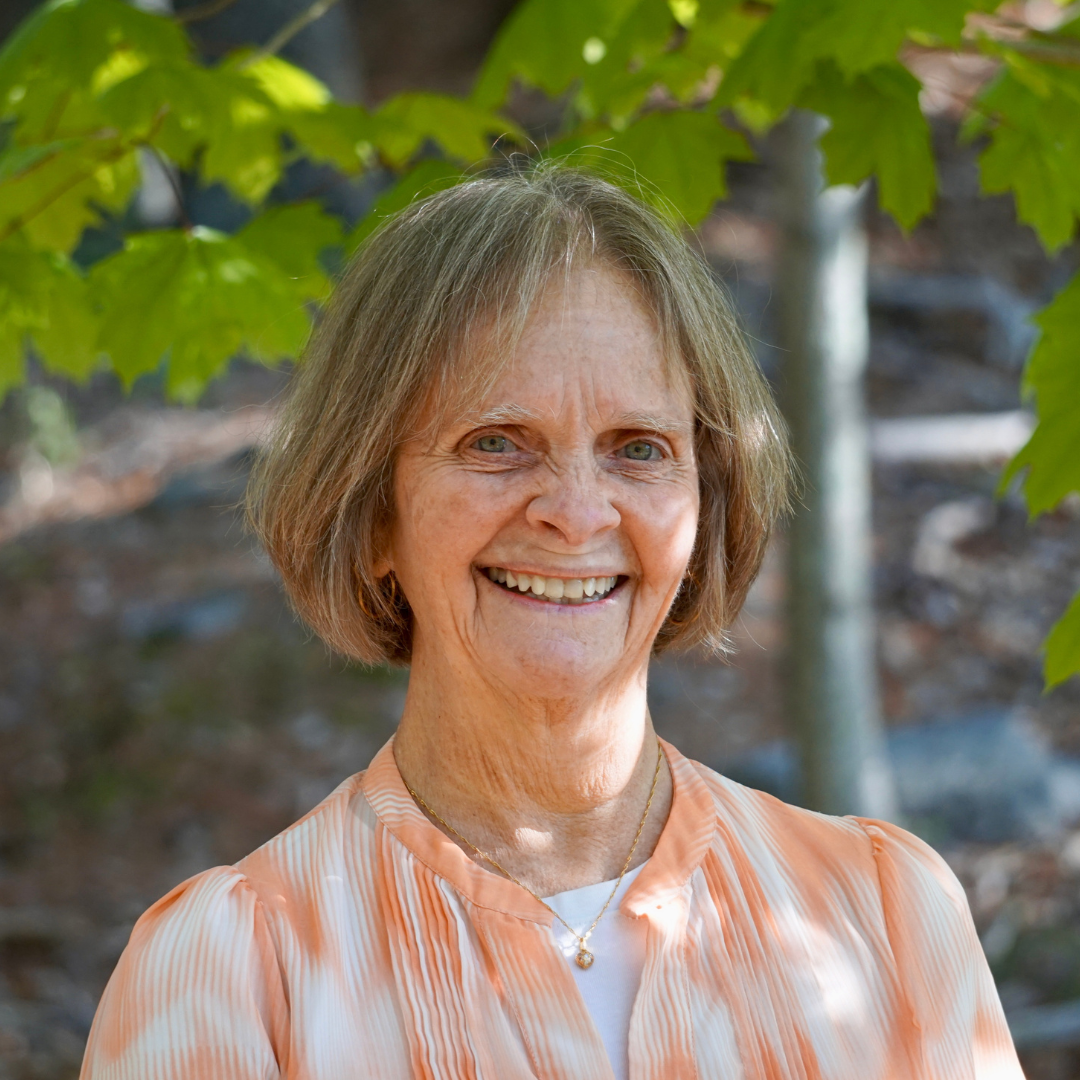
Ellen Lenox Smith has emerged as a leading voice for patients living with pain. Currently, Ellen serves as Co-Director of Medical Cannabis Advocacy for the U.S. Pain Foundation and is a member of its Board of Directors. She is also active with the EDS RI support group.
Before patient advocacy, Ellen was a longtime middle school social studies teacher. She has been married for 53 years and is the proud mother of four adult children and grandmother to five grandchildren. She is also the author of two books, an organic gardener, and was previously a master swimmer and high school swim coach.
Subscribe to our newsletter

U.S. Pain Foundation is a 501 (c)(3) nonprofit organization dedicated to serving those who live with conditions that cause chronic pain, as well as their caregivers and care providers. Learn more.
Our Sponsors
U.S. Pain Foundation relies on the generosity of donations and grants. We are especially thankful to our Corporate Council for sustaining our programs and services year-round. Learn more.
Contact Us
U.S. Pain Foundation, Inc.
15 North Main Street, Unit 100
West Hartford, CT 06107
Telephone: 800.910.2462
Email:
contact@uspainfoundation.org
Tax ID number: 26-2703521
All Content Copyright 2021 | All rights reserved. U.S. Pain Foundation is a qualified 501(c)(3) tax-exempt organization. Disclaimer