
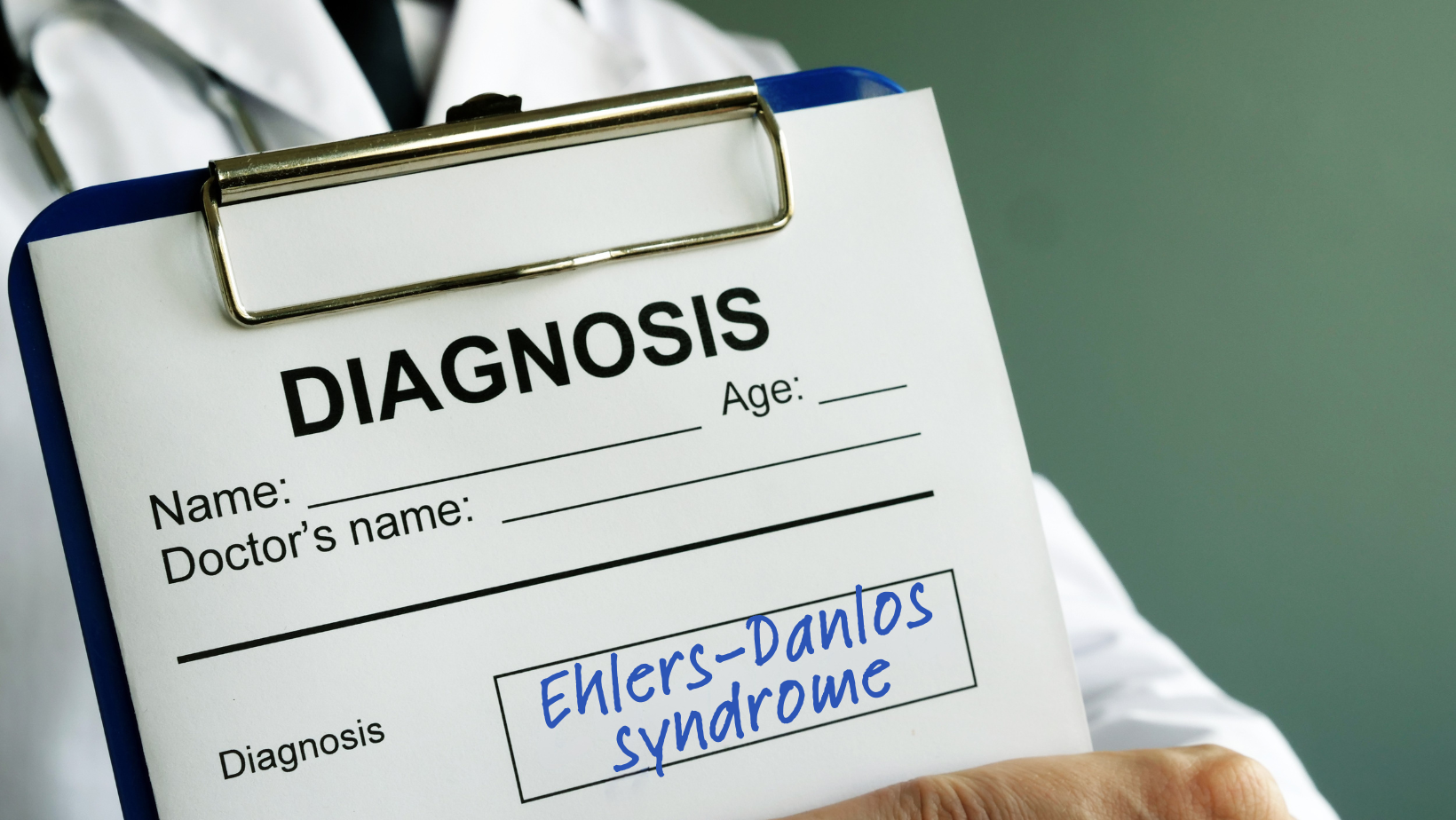
Did you recently get diagnosed with Ehlers-Danlos syndrome (EDS), and feel overwhelmed and confused about where to turn for help? What was described to me years ago as a rare condition is now believed to be much more prevalent, particularly when combined with the broader diagnosis of joint hypermobility disorder or hypermobility spectrum disorder (HSD).
Still, many, like me, wait years to find out what is really the problem. Being diagnosed at the age of 54 with a condition I was born with lit a spark in me to do all I could to help others learn to cope. We have to wonder, if so many of us are living with the chaos and confusion of this condition, then why do we feel so lost as to where to begin to help ourselves? Shouldn’t the medical field be right there by our side with guidance?
Well, as they catch up to us and learn how to help us, let’s make it our mission to pass information forward to help those around us. That may look like setting up a support group, sharing a list of medical personnel who are willing to learn and help with EDS, and paying it forward by sharing the strategies that have worked for us—including to medical providers working to learn more, as I’ve done in the past.
But meanwhile, if you’ve just been diagnosed or don’t know where to start, what can you do to begin the process of trying to get on top of this condition? This Ehlers-Danlos Syndromes (EDS) and Hypermobility Spectrum Disorders (HSD) Awareness Month, I’d like to share some of what I’ve experienced and learned during my decades of living with and managing this disease.
Please note that the information in this article should not be considered as professional medical advice, diagnosis, or treatment. It is for informational purposes only and represents my opinions alone, rather than the views of the U.S. Pain Foundation. These are my personal experiences and suggestions on what has helped me improve my quality of life. I share this in hopes that others living with this condition might also learn something new and improve their quality of life, too.
What is Ehlers-Danlos syndrome?
EDS is an inherited disorder primarily involving problems with the body’s connective tissue. There are 13 subtypes, with various levels of severity and impact.
Hypermobile EDS (hEDS) is by far the most common subtype, accounting for about 9 in 10 cases. Classical EDS (cEDS) and vascular EDS (vEDS) are the next most common types, with the remaining subtypes being diagnosed much more rarely.
HSD more broadly describes connective tissue disorders causing joint hypermobility and instability; some people are diagnosed with HSD when they don’t meet all of the diagnostic criteria for EDS. While this piece is largely based on my experiences with EDS, many of these insights will apply to those with HSD as well.
Some people living with EDS go through life with minimal symptoms and little pain. Others are faced with a wide range of symptoms and complications.
Clinical manifestations of EDS are most often joint- and skin-related and may include:
- Joints: Joint hypermobility (extreme flexibility) and hyperextensibility (movement beyond the joint’s normal range); loose or unstable joints that are prone to frequent dislocations and/or subluxations; joint pain.
- Skin: Soft, velvety skin; skin hyperextensibility (stretchiness); fragile skin that tears or bruises easily or severely; severe scarring; slow and poor wound healing.
Other symptoms, which can vary by subtype, include chronic, early-onset, debilitating musculoskeletal pain; fatigue; scoliosis or neck instability; and mitral valve prolapse. Less common symptoms or complications associated with rare subtypes can include arterial, intestinal, or uterine fragility or rupture; scleral fragility; poor muscle tone; and gum disease.
Due in part to the fact that the connective tissue impacted by EDS is widespread throughout the body, there are a number of associated disorders people may deal with, including postural orthostatic tachycardia syndrome (POTS) and other types of dysautonomia; mast cell activation syndrome (MCAS); Raynaud’s disease; early-onset osteoarthritis; autoimmune conditions; migraine and other headache disorders; a number of gastrointestinal disorders; gynecologic conditions; Chiari I malformation; craniocervical instability; tethered cord syndrome; and more.
EDS is often misdiagnosed as fibromyalgia, osteoarthritis, rheumatoid arthritis, lupus, multiple sclerosis, myalgic encephalomyelitis/chronic fatigue syndrome (ME/CFS), or Munchausen syndrome or other psychiatric disorders. To complicate matters further, it is possible to have both EDS alongside one or more of most of these disorders.
How is EDS Diagnosed?
While a number of providers or specialists, including general practitioners or rheumatologists, may be initially involved in identifying or suspecting EDS, a confirmed diagnosis is often obtained by a geneticist familiar with the disease, as our symptoms can vary significantly.
For some types of EDS, a skin biopsy to determine the chemical makeup of the connective tissue can help to suggest the diagnosis.
Genetic testing can also help identify most subtypes of EDS—but not hEDS, the most common type. Geneticists often diagnose hEDS after ruling out other types.
For some, the diagnosis of EDS is based upon the patient’s clinical findings and family history. However, while family history is key in helping diagnose EDS, particularly when genetic testing can’t help, the National Institutes of Health (NIH) has found patients who were born with EDS with no family history. And due to the difficulty of receiving a diagnosis, some people are the first in their family to be diagnosed.
After receiving a diagnosis of EDS, you can work with your providers to find the best ways to manage the disease. These are some of the tips I have learned.
Maintaining Physical Activity
When you live with chronic pain, you can get emotionally and physically worn down, and you may sometimes feel that you have no energy to exercise.
But living with EDS makes it all the more important to do just that. We need to keep our muscles strong to help support our joints, and cardio workouts also help keep our bodies in the best shape possible.
Consider the stationary bike, walking when you’re able, and swimming. The Muldowney Protocol is often cited as being helpful for those with EDS.
Controlling Blood Pressure and Heart Rate
Many of us live with lower blood pressure and/or higher heart rates than normal. There are a few things that I have found to be very helpful for this:
- Drink plenty of water.
- Elevate your bed frame at your head to 30 degrees.
- Salt your food, or add salt or electrolytes to your drinks, which can help with dizziness and lightheadedness. Not all types of salt or electrolytes are the same, so it’s best to do your research and check with your provider.
- Don’t get to the point of passing out and doing damage. If you feel the self-management strategies listed above are not working, see your provider or a cardiologist to discuss additional strategies or medication.
- In some cases, it may be recommended that someone with EDS has regular echocardiograms to test the heart’s function.
Addressing Orthopedic Issues
Arch supports are another tool that can be helpful, as many of us deal with flat feet.
If the strategies you use to manage joint pain and dislocations or subluxations aren’t enough, your providers may recommend surgery.
While a patient’s own tissue is sometimes used in surgeries to repair another area, the connective tissue defects from EDS make your ligaments and tendons weaker. Talk to your surgeons about using cadaver tendons instead to help hold your bones in position.
Managing Inflammation
Our bodies’ reactions to certain substances or irritants can lead to inflammation and increased symptoms. I’ve found it helpful to pay attention to the following:
- Food sensitivities: A food sensitivity blood test can offer tremendous assistance in reducing reactions and inflammation. Find a knowledgeable dietitian to guide you.
- Drug sensitivities: A DNA drug sensitivity test can help determine if certain medications are safe for you and can be properly metabolized.
- Candida overgrowth: We can be more prone to these yeast or fungal infections, which can be triggered by certain foods or medications, stress, or skin or gut issues. A blood or lab test can diagnose an infection, which can be treated with medication.
Caring for Your Mind
Following your diagnosis, take time to grieve. It’s OK and necessary to allow yourself to mourn the loss of your past life. Life will move on, but it will never be exactly as you have known it.
Try to live with hope.
Try to live with purpose.
Try to be proactive.
Try to keep your mind as sharp as possible. These are some of my favorite ideas:
- Reading
- Writing
- Advocating
- Adult coloring
- Sudoku
- Word scrambles
- Crossword puzzles
- Music
- Puzzles
- Sewing
- Painting
Tending to Your Spirit
Many of us have experienced our friendships diminishing, due to either being judged for looking fine, or just not being able to keep up with activities with our friends.
I have found, especially when recovering from surgeries, that my contacts in life become very limited. It’s hard for others to understand that we still need friends.
Try to not get isolated, even though it’s difficult. Look for new ways to stay connected. Find a local or online support group, or connect with others who are also trying to learn to cope with chronic health issues.
Simple acts like visiting a rehab center or nursing home, and reaching out to others also struggling, can help give you a better perspective on your life.
Try to remind yourself each day of things you are grateful for.
May life be kind to you and give you strength—you can do this!
—by Ellen Lenox Smith
About the author
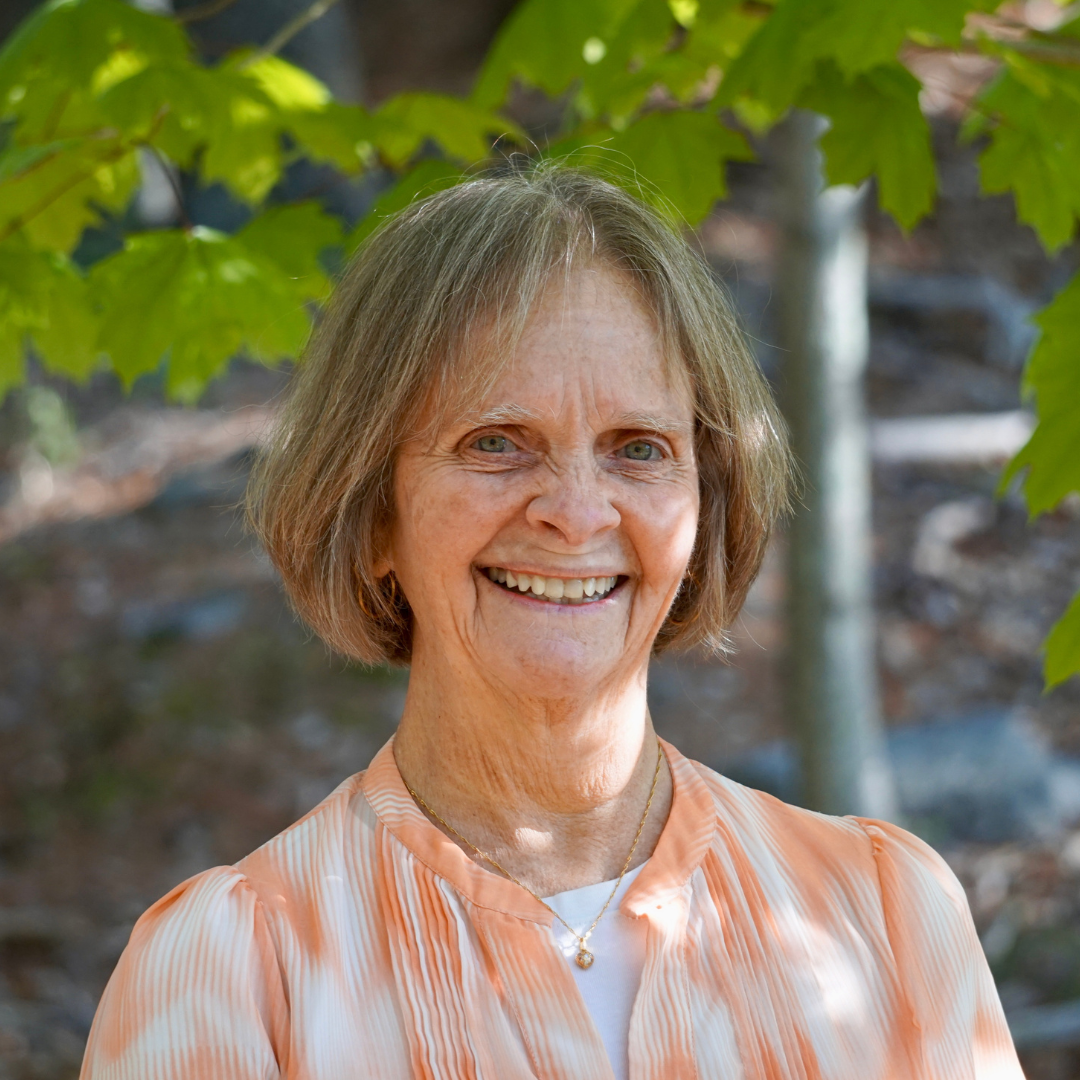
Ellen Lenox Smith has emerged as a leading voice for patients living with pain. Currently, Ellen serves as Co-Director of Medical Cannabis Advocacy for the U.S. Pain Foundation and is a member of its Board of Directors. She is also active with the EDS RI support group.
Before patient advocacy, Ellen was a longtime middle school social studies teacher. She has been married for 53 years and is the proud mother of four adult children and grandmother to five grandchildren. She is also the author of two books, an organic gardener, and was previously a master swimmer and high school swim coach.
Subscribe to our newsletter

U.S. Pain Foundation is a 501 (c)(3) nonprofit organization dedicated to serving those who live with conditions that cause chronic pain, as well as their caregivers and care providers. Learn more.
Our Sponsors
U.S. Pain Foundation relies on the generosity of donations and grants. We are especially thankful to our Corporate Council for sustaining our programs and services year-round. Learn more.
Contact Us
U.S. Pain Foundation, Inc.
15 North Main Street, Unit 100
West Hartford, CT 06107
Telephone: 800.910.2462
Email:
contact@uspainfoundation.org
Tax ID number: 26-2703521
All Content Copyright 2021 | All rights reserved. U.S. Pain Foundation is a qualified 501(c)(3) tax-exempt organization. Disclaimer